
热门资讯> 正文
Solar and Wind Face Renewed Pressure as Tax Bill Targets Clean Energy Incentives
2025-07-01 10:53
TradingKey - The Senate’s new version of the tax bill, known as the “Big Beautiful Bill,” could deliver a significant hit to the clean energy sector. It accelerates the phase-out of clean energy subsidies and introduces new consumption taxes targeting wind and solar sectors.
Key amendments in this tax proposal include a new consumption tax on wind and solar projects if a certain percentage of their components are sourced from China. Additionally, the end date for clean energy project subsidies is moved up to the end of 2027, with electric vehicle tax credits ending after September.
This version is more stringent than the previous House proposal, requiring wind and solar projects to be fully operational by 2027’s end to qualify for incentives.
This news sent shockwaves through the clean energy industry. Ben King, Deputy Director at Rhodium Group, commented that these measures were entirely unexpected, leaving the industry in shock.
According to the American Clean Power Association (ACP), the new consumption tax could impose an additional $4-7 billion cost on U.S. clean energy companies over the next decade. Rhodium Group forecasts a 10% to 20% increase in wind and solar construction costs due to the new tax.
Concerns extend beyond the industry. Tesla CEO Elon Musk criticized the bill on his social media platform X, calling it Republican political suicide and describing its impact on the energy sector as extremely crazy and destructive. Tesla benefits from battery storage tax incentives, and its customers rely heavily on tax credits for electric cars and solar panels, making the bill's changes a direct threat to Tesla's interests.
Sean McGarvey, President of the North America’s Building Trades Unions, referred to this bill as the biggest job-killing bill in U.S. history.
On Monday, senators advanced the bill's revisions. Republican senators, including Joni Ernst from Iowa, aim to soften the bill’s restrictions on tax credits for wind and solar projects. They propose allowing tax credits if construction begins in 2026 or 2027 and removing the new consumption tax.
U.S. clean energy stocks reacted variably to the news. The bill retains tax credits for solar leasing services, boosting several solar stocks: First Solar rose 6.6%, Sunrun climbed 5%, and Fluence Energy increased by 11%. Conversely, solar cell company Enphase Energy's shares fell 4%, while utility company NextEra Energy, with a renewable portfolio, dropped 4%.
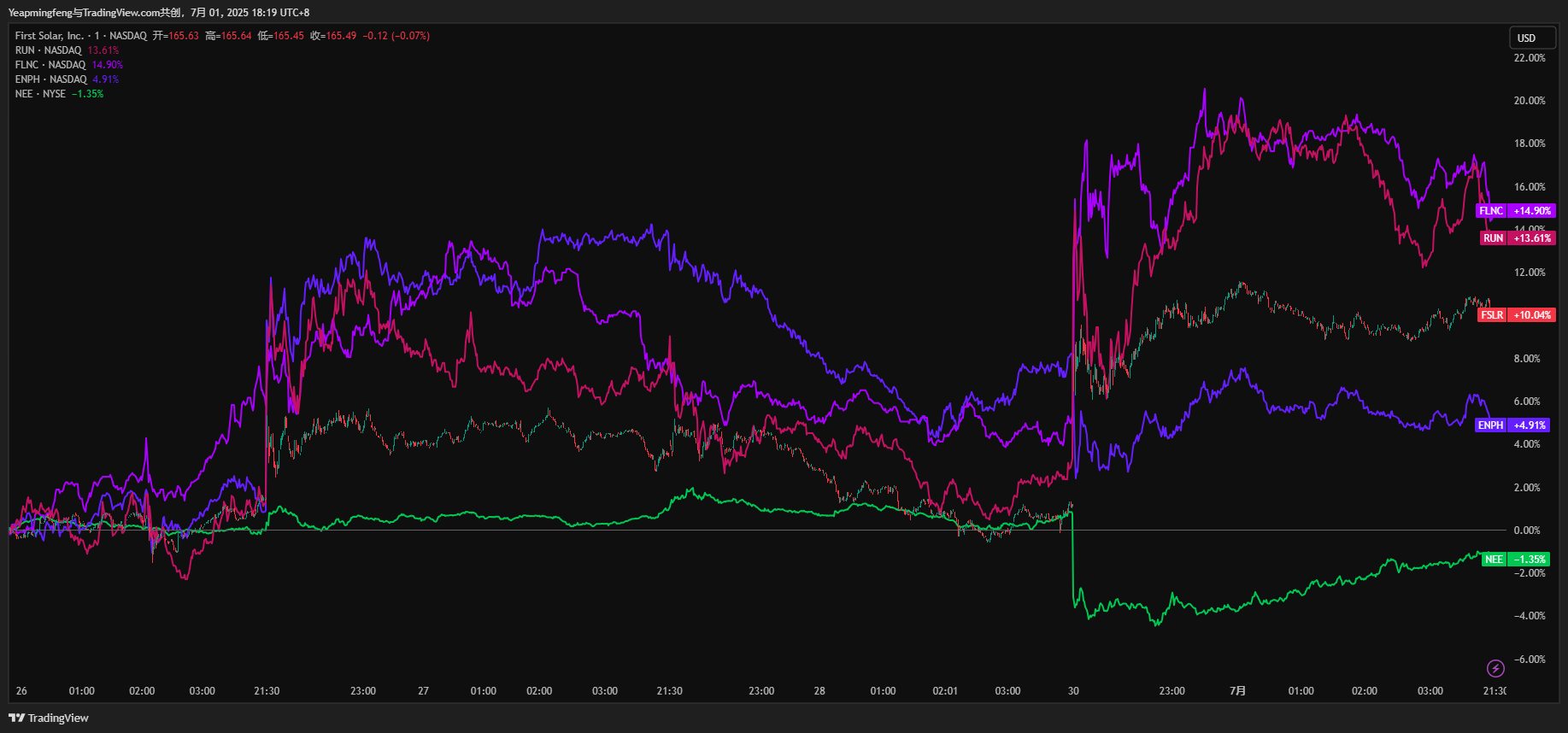
[Clean energy companys stock price changes, source: TradingView]
RBC Capital Markets analysts pointed out that the Senate version of the bill has complex implications for clean energy stocks. Analysts at Raymond James Financial explained that these stocks had already faced pressure when earlier versions of the bill were introduced.


